2024 ・ Accessibility ・ UX research ・ Inclusive Design ・ WCAG 2.2

RBO Digital Accessibility

Achieving Offline-Online Parity through Auditing

  • Timeline

    Oct – Dec 2024, 3 months

  • Role

    Accessibility Auditor

  • Collaboration

    Academic-Industry Partnership:MSc Inclusive Design Module × RBO UX Team

  • Focus

    Technical Compliance (WCAG 2.2)
Context & Objective

Bridging the Experience Gap

The Royal Ballet and Opera (RBO) is renowned for its world-class inclusive performances. However, a disparity existed between this physical inclusivity and the digital experience.

Objective

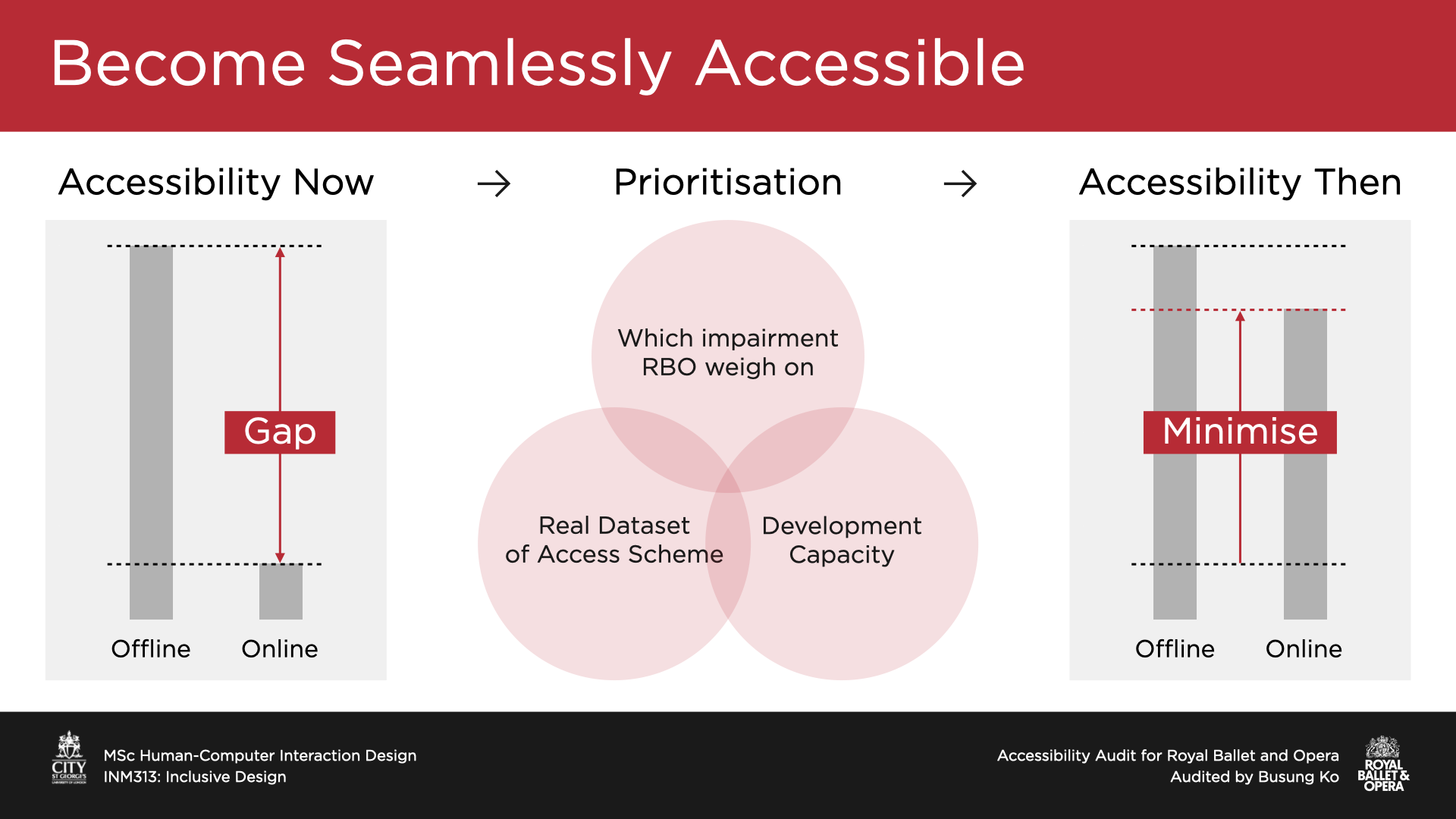
Ensure the inclusive philosophy is equally felt within the digital environment. The project aimed to achieve Offline-Online Accessibility Parity by identifying and removing technical barriers throughout the visitor’s digital journey.

Strategy: Aligning Context

Aligning Business Model with User Context

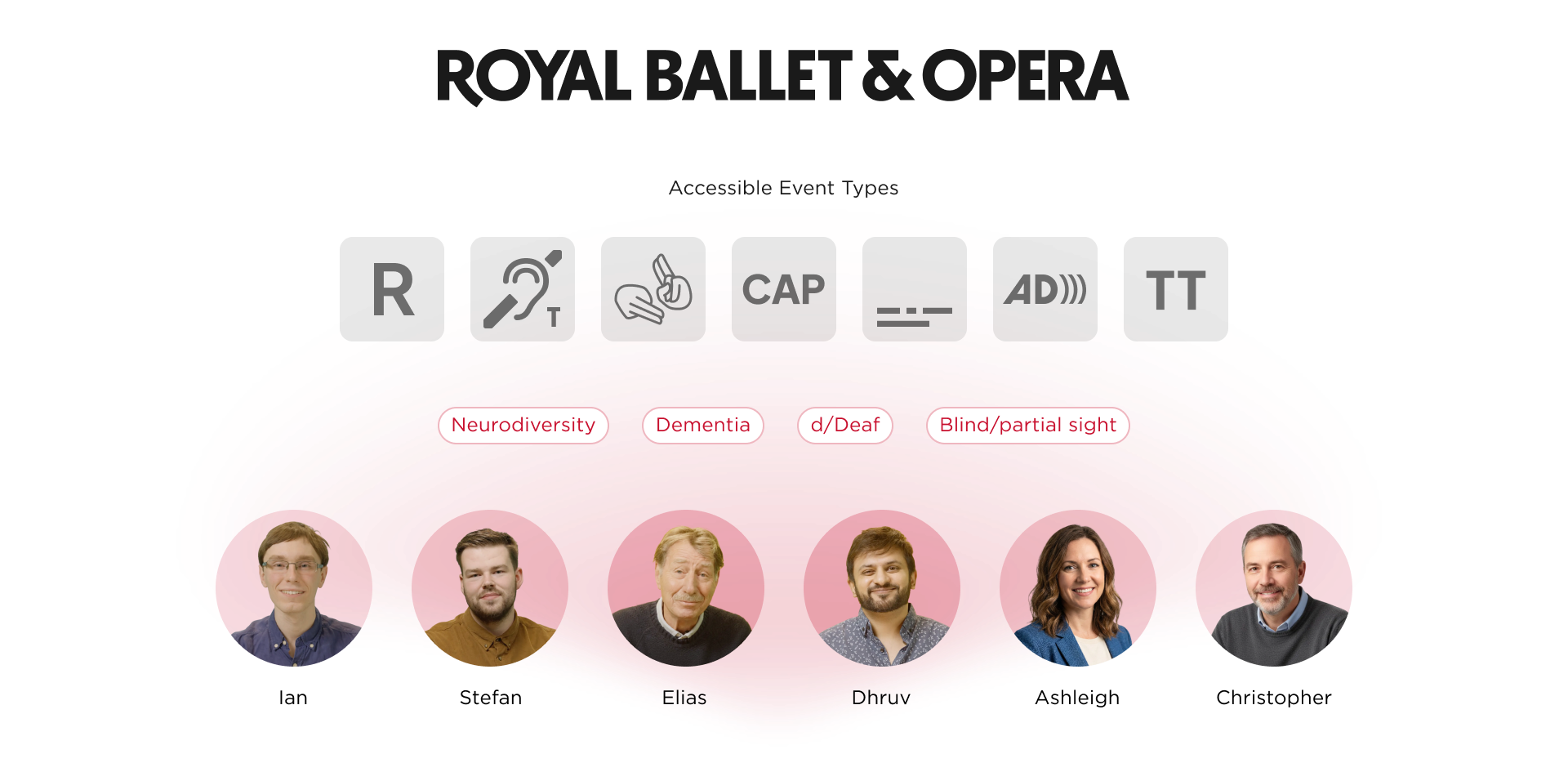
To ensure the audit’s validity, the research began by analysing RBO’s actual accessible event types (e.g., Relaxed, BSL, Audio Described performances). Based on this operational context, six personas representing real audience segments were selected from GOV.UK and W3C standards.

This step ensured that findings were not just theoretical violations but direct impediments to RBO’s core operational goals.

Execution

Meticulous Multi-Layered Audit

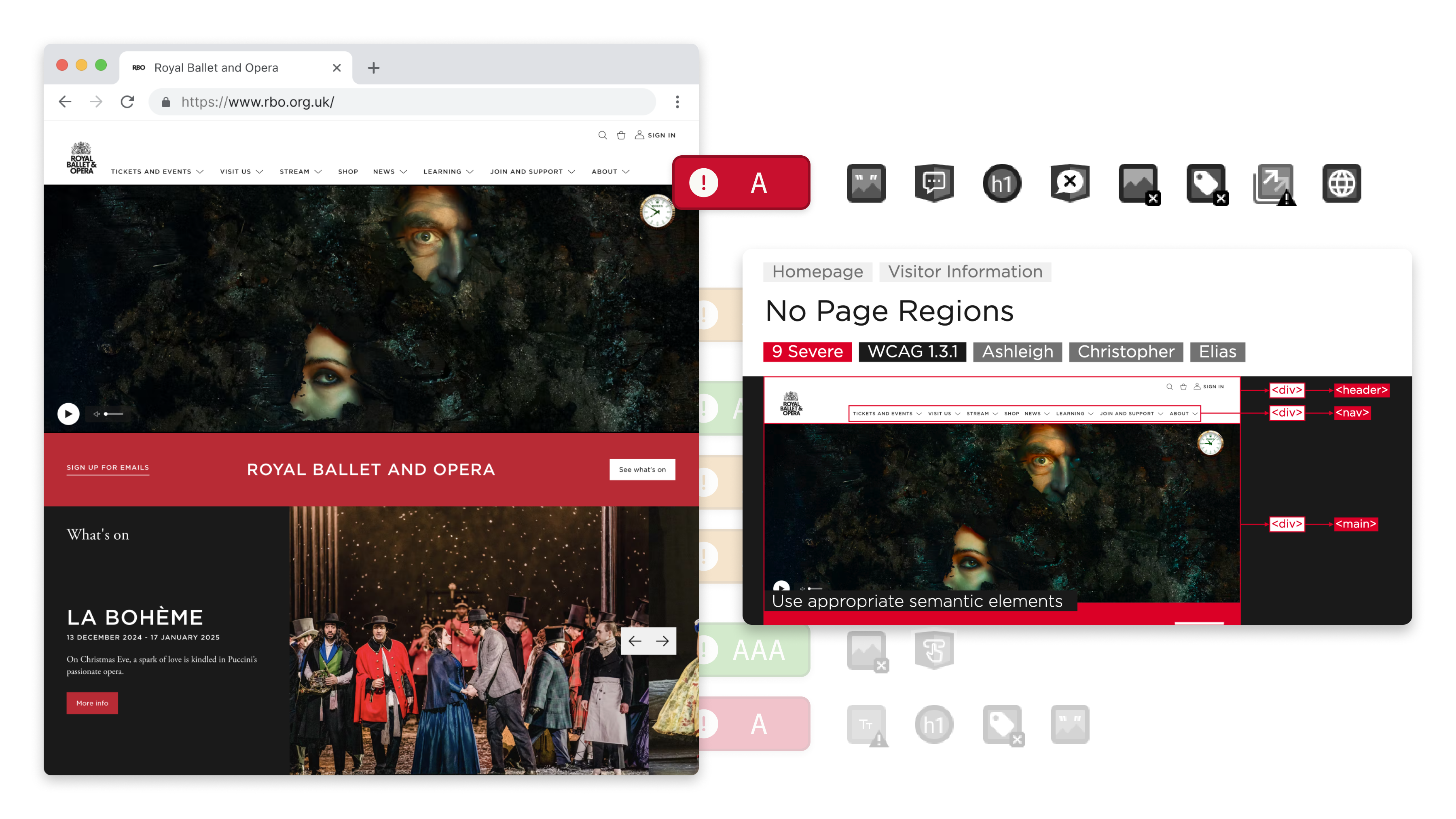
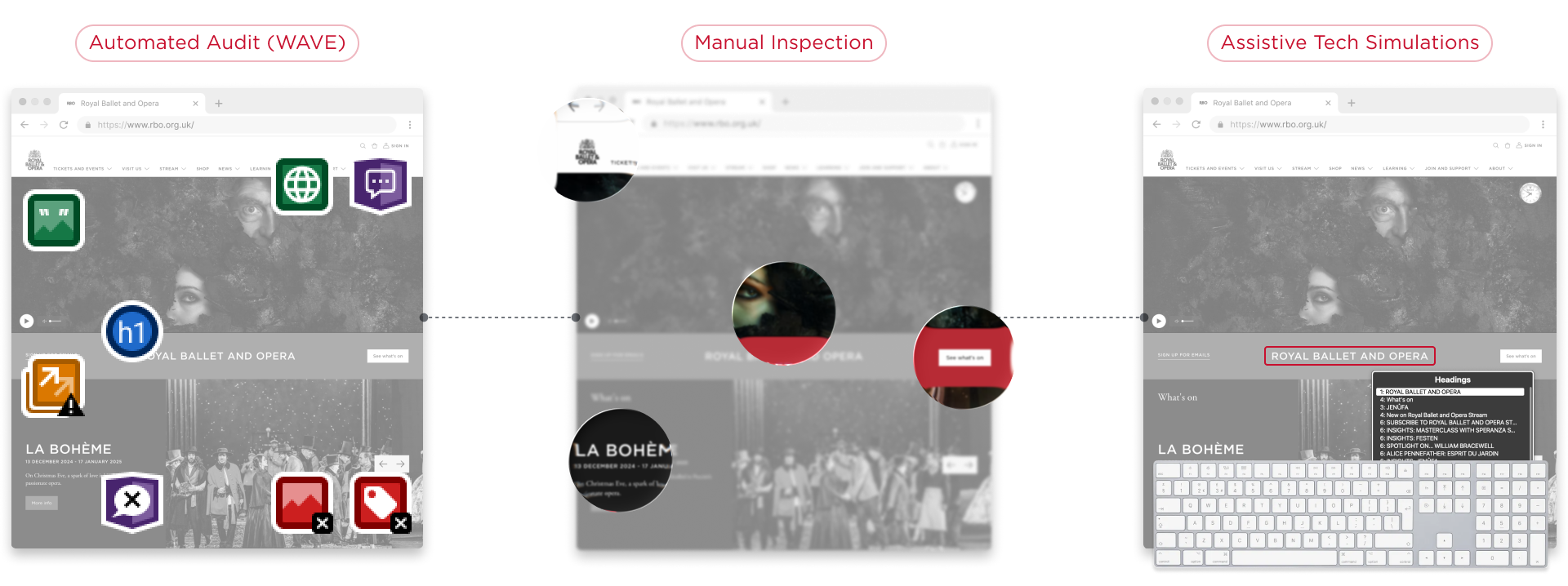
A diagnostic process was conducted on the Homepage and Visitor Information page (specified on the client requirements) through three levels of verification:

  1. Automated Audit

    Efficient scanning of widespread technical syntax issues by using WAVE.

  2. Manual Inspection

    Visual audit based on Autism Accessibility Guidelines by Hassell Inclusion and Government Design Standards.

  3. Assistive Tech Simulation

    Navigating the site using screen readers, zoom tools, and keyboard-only inputs to measure real-world friction from the personas’ perspectives.

Logic & Outcome

Prioritisation Framework: Quantifying the Severity

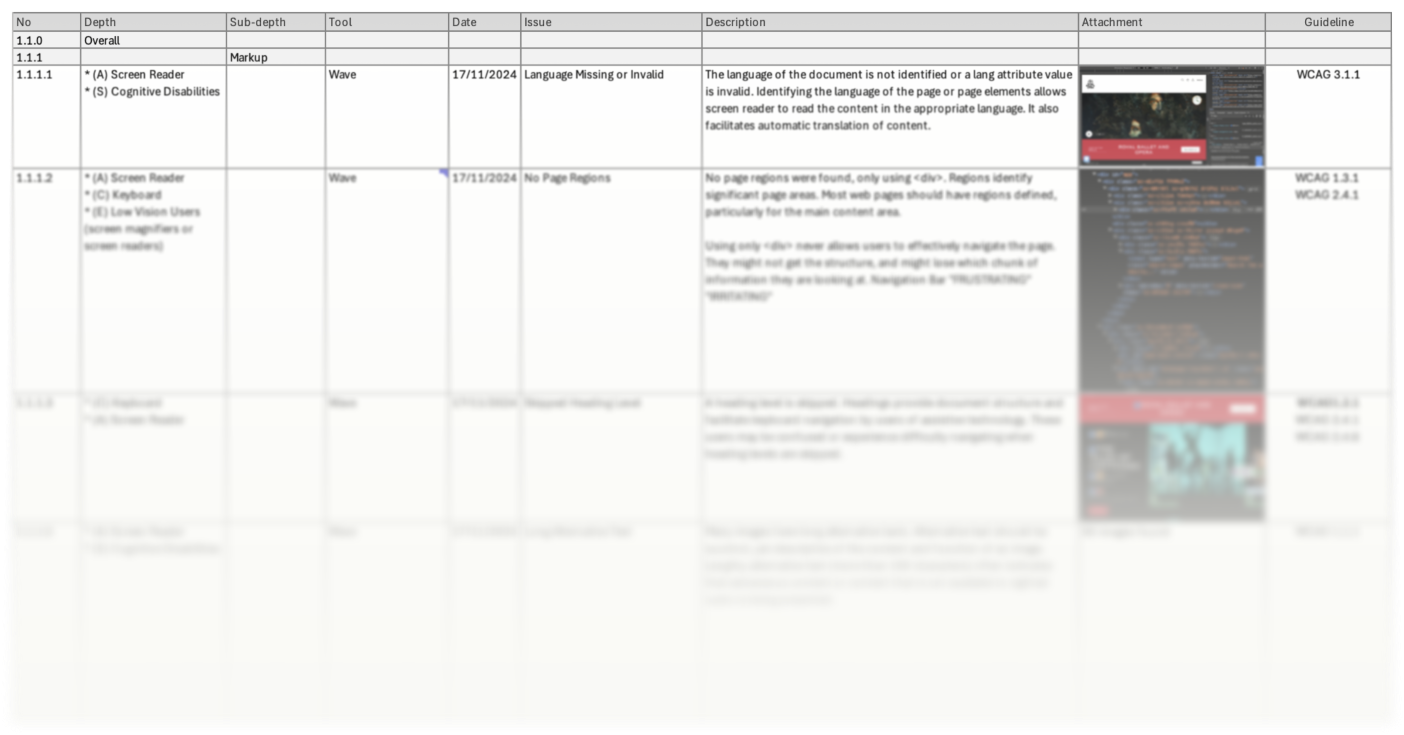
The audit identified a comprehensive list of 56 technical barriers. To eliminate subject bias in prioritisation, a data-driven scoring model was designed to objectively rank the urgency of improvements.

Severity Score = Impacted Personas* × WCAG Violation Level (1–3)

Using multiplication maximised the score variance, creating a clear benchmark for decision-making.* 1 per persona, 0.5 per condition except for what personas have.

This logic distilled raw issues into 10 Prioritised Recommendations, highlighting blockers that disproportionately affected RBO's core audience:

No Focus Shift

Lack of automatic focus movement when triggering the search input, creating a critical blocker for keyboard users.

Missing Captions

Hero-section videos lacking subtitles, excluding users with hearing impairments or situational constraints.

Non-functional Carousel Control

Interactive elements that failed to trigger on screens wider than 1398px, impacting nearly half* of desktop users.

* StatCounter Global Stats (Dec 2024)

Impact & Reflection

Catalysing Change through Shared Empathy

The presentation served as a turning point for the RBO UX team. By connecting technical violations directly to real user barriers, the findings bridged the gap between compliance rules and human experience.

However, acknowledging that our external audit treated all barriers equally, I advised the team to refine priorities using their internal data. By layering factors like accessible event ticket sales and engineering estimates, this recommendation provided the necessary framework to translate our findings into a practical roadmap that fit their operational reality.

Reflection

This project reinforced a vital lesson: Accessibility is not merely a compliance checklist, but a commitment to inclusivity.

The role of a designer extends beyond creating interfaces. It involves acting as a strategic advocate who aligns accessibility with business goals. This ensures technical constraints translate into equitable experiences where no customer segment is excluded from the brand’s promise.

2024 ・ Accessibility ・ UX research ・ Inclusive Design ・ WCAG 2.2

RBO Digital Accessibility

Achieving Offline-Online Parity through Auditing

  • Timeline

    Oct – Dec 2024, 3 months

  • Role

    Accessibility Auditor

  • Collaboration

    Academic-Industry Partnership:MSc Inclusive Design Module × RBO UX Team

  • Focus

    Technical Compliance (WCAG 2.2)
Context & Objective

Bridging the Experience Gap

The Royal Ballet and Opera (RBO) is renowned for its world-class inclusive performances. However, a disparity existed between this physical inclusivity and the digital experience.

Objective

Ensure the inclusive philosophy is equally felt within the digital environment. The project aimed to achieve Offline-Online Accessibility Parity by identifying and removing technical barriers throughout the visitor’s digital journey.

Strategy: Aligning Context

Aligning Business Model with User Context

To ensure the audit’s validity, the research began by analysing RBO’s actual accessible event types (e.g., Relaxed, BSL, Audio Described performances). Based on this operational context, six personas representing real audience segments were selected from GOV.UK and W3C standards.

This step ensured that findings were not just theoretical violations but direct impediments to RBO’s core operational goals.

Execution

Meticulous Multi-Layered Audit

A diagnostic process was conducted on the Homepage and Visitor Information page (specified on the client requirements) through three levels of verification:

  1. Automated Audit

    Efficient scanning of widespread technical syntax issues by using WAVE.

  2. Manual Inspection

    Visual audit based on Autism Accessibility Guidelines by Hassell Inclusion and Government Design Standards.

  3. Assistive Tech Simulation

    Navigating the site using screen readers, zoom tools, and keyboard-only inputs to measure real-world friction from the personas’ perspectives.

Logic & Outcome

Prioritisation Framework: Quantifying the Severity

The audit identified a comprehensive list of 56 technical barriers. To eliminate subject bias in prioritisation, a data-driven scoring model was designed to objectively rank the urgency of improvements.

Severity Score = Impacted Personas* × WCAG Violation Level (1–3)

Using multiplication maximised the score variance, creating a clear benchmark for decision-making.* 1 per persona, 0.5 per condition except for what personas have.

This logic distilled raw issues into 10 Prioritised Recommendations, highlighting blockers that disproportionately affected RBO's core audience:

No Focus Shift

Lack of automatic focus movement when triggering the search input, creating a critical blocker for keyboard users.

Missing Captions

Hero-section videos lacking subtitles, excluding users with hearing impairments or situational constraints.

Non-functional Carousel Control

Interactive elements that failed to trigger on screens wider than 1398px, impacting nearly half* of desktop users.

* StatCounter Global Stats (Dec 2024)

Impact & Reflection

Catalysing Change through Shared Empathy

The presentation served as a turning point for the RBO UX team. By connecting technical violations directly to real user barriers, the findings bridged the gap between compliance rules and human experience.

However, acknowledging that our external audit treated all barriers equally, I advised the team to refine priorities using their internal data. By layering factors like accessible event ticket sales and engineering estimates, this recommendation provided the necessary framework to translate our findings into a practical roadmap that fit their operational reality.

Reflection

This project reinforced a vital lesson: Accessibility is not merely a compliance checklist, but a commitment to inclusivity.

The role of a designer extends beyond creating interfaces. It involves acting as a strategic advocate who aligns accessibility with business goals. This ensures technical constraints translate into equitable experiences where no customer segment is excluded from the brand’s promise.

2024 ・ Accessibility ・ UX research ・ Inclusive Design ・ WCAG 2.2

RBO Digital Accessibility

Achieving Offline-Online Parity through Auditing

  • Timeline

    Oct – Dec 2024, 3 months

  • Role

    Accessibility Auditor

  • Collaboration

    Academic-Industry Partnership:MSc Inclusive Design Module × RBO UX Team

  • Focus

    Technical Compliance (WCAG 2.2)
Context & Objective

Bridging the Experience Gap

The Royal Ballet and Opera (RBO) is renowned for its world-class inclusive performances. However, a disparity existed between this physical inclusivity and the digital experience.

Objective

Ensure the inclusive philosophy is equally felt within the digital environment. The project aimed to achieve Offline-Online Accessibility Parity by identifying and removing technical barriers throughout the visitor’s digital journey.

Strategy: Aligning Context

Aligning Business Model with User Context

To ensure the audit’s validity, the research began by analysing RBO’s actual accessible event types (e.g., Relaxed, BSL, Audio Described performances). Based on this operational context, six personas representing real audience segments were selected from GOV.UK and W3C standards.

This step ensured that findings were not just theoretical violations but direct impediments to RBO’s core operational goals.

Execution

Meticulous Multi-Layered Audit

A diagnostic process was conducted on the Homepage and Visitor Information page (specified on the client requirements) through three levels of verification:

  1. Automated Audit

    Efficient scanning of widespread technical syntax issues by using WAVE.

  2. Manual Inspection

    Visual audit based on Autism Accessibility Guidelines by Hassell Inclusion and Government Design Standards.

  3. Assistive Tech Simulation

    Navigating the site using screen readers, zoom tools, and keyboard-only inputs to measure real-world friction from the personas’ perspectives.

Logic & Outcome

Prioritisation Framework: Quantifying the Severity

The audit identified a comprehensive list of 56 technical barriers. To eliminate subject bias in prioritisation, a data-driven scoring model was designed to objectively rank the urgency of improvements.

Severity Score = Impacted Personas* × WCAG Violation Level (1–3)

Using multiplication maximised the score variance, creating a clear benchmark for decision-making.* 1 per persona, 0.5 per condition except for what personas have.

This logic distilled raw issues into 10 Prioritised Recommendations, highlighting blockers that disproportionately affected RBO's core audience:

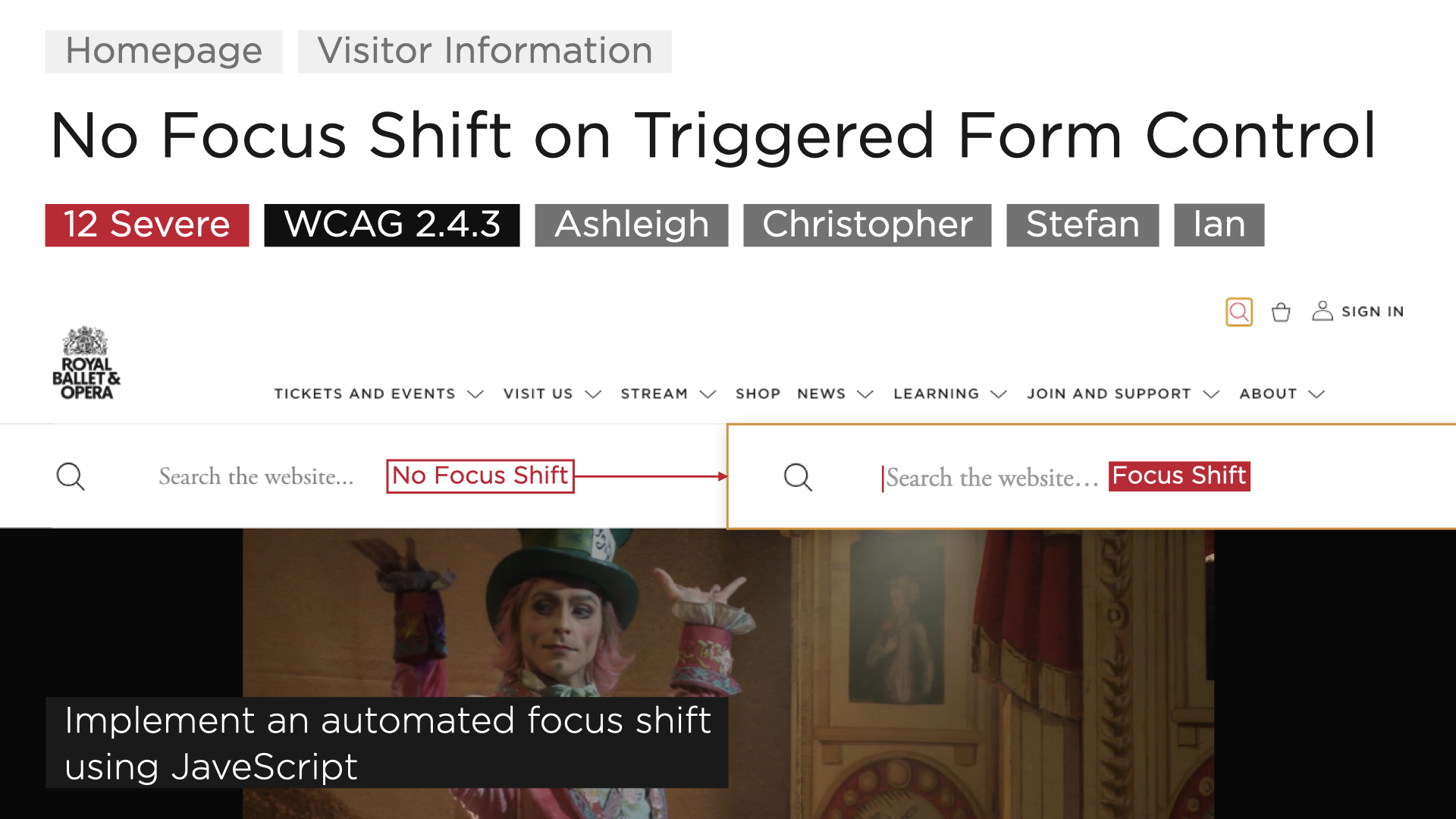
No Focus Shift

Lack of automatic focus movement when triggering the search input, creating a critical blocker for keyboard users.

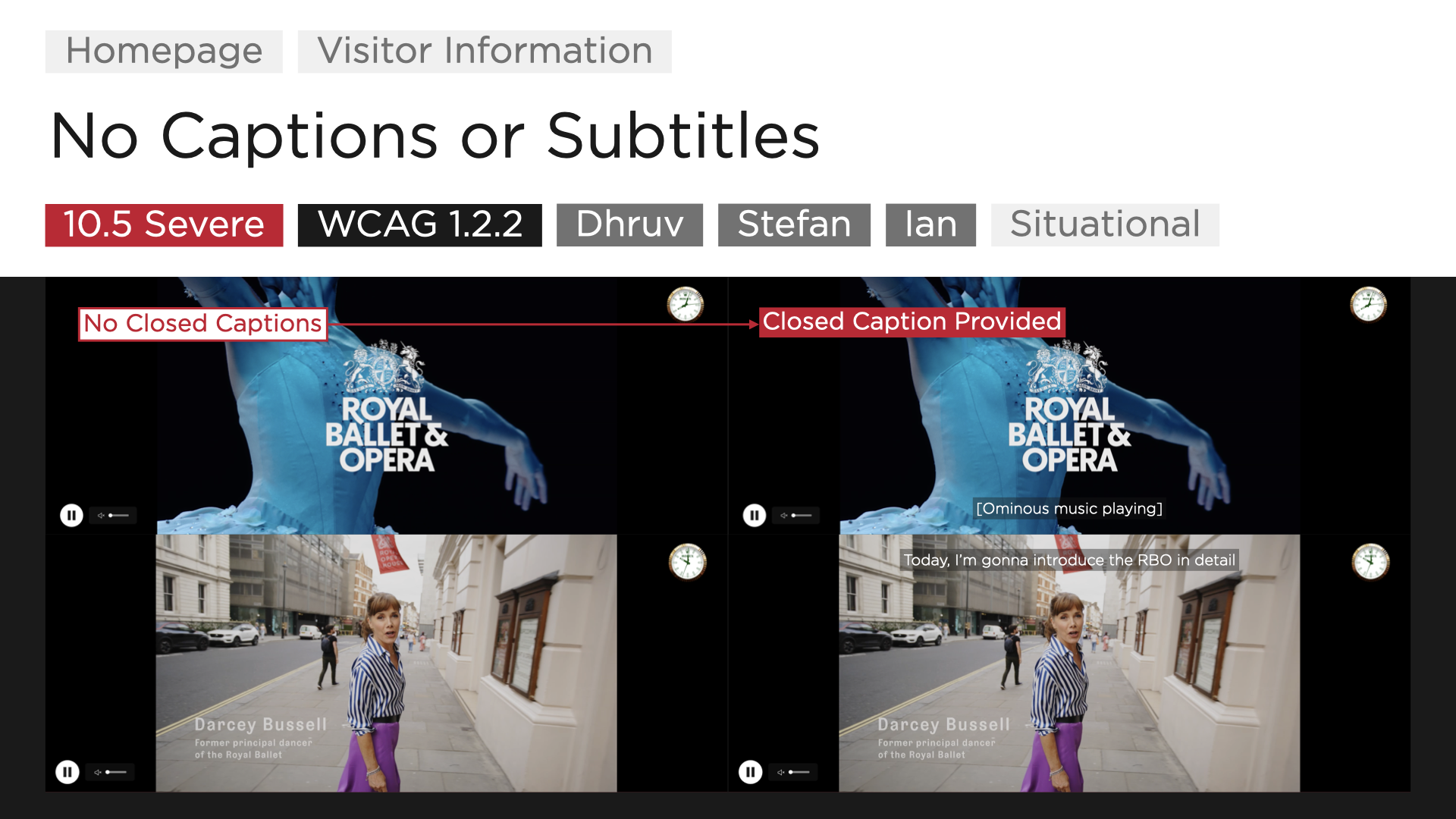
Missing Captions

Hero-section videos lacking subtitles, excluding users with hearing impairments or situational constraints.

Non-functional Carousel Control

Interactive elements that failed to trigger on screens wider than 1398px, impacting nearly half* of desktop users.

* StatCounter Global Stats (Dec 2024)

Impact & Reflection

Catalysing Change through Shared Empathy

The presentation served as a turning point for the RBO UX team. By connecting technical violations directly to real user barriers, the findings bridged the gap between compliance rules and human experience.

However, acknowledging that our external audit treated all barriers equally, I advised the team to refine priorities using their internal data. By layering factors like accessible event ticket sales and engineering estimates, this recommendation provided the necessary framework to translate our findings into a practical roadmap that fit their operational reality.

Reflection

This project reinforced a vital lesson: Accessibility is not merely a compliance checklist, but a commitment to inclusivity.

The role of a designer extends beyond creating interfaces. It involves acting as a strategic advocate who aligns accessibility with business goals. This ensures technical constraints translate into equitable experiences where no customer segment is excluded from the brand’s promise.

2024 ・ Accessibility ・ UX research ・ Inclusive Design ・ WCAG 2.2

RBO Digital Accessibility

Achieving Offline-Online Parity through Auditing

  • Timeline

    Oct – Dec 2024, 3 months

  • Role

    Accessibility Auditor

  • Collaboration

    Academic-Industry Partnership:MSc Inclusive Design Module × RBO UX Team

  • Focus

    Technical Compliance (WCAG 2.2)
Context & Objective

Bridging the Experience Gap

The Royal Ballet and Opera (RBO) is renowned for its world-class inclusive performances. However, a disparity existed between this physical inclusivity and the digital experience.

Objective

Ensure the inclusive philosophy is equally felt within the digital environment. The project aimed to achieve Offline-Online Accessibility Parity by identifying and removing technical barriers throughout the visitor’s digital journey.

Strategy: Aligning Context

Aligning Business Model with User Context

To ensure the audit’s validity, the research began by analysing RBO’s actual accessible event types (e.g., Relaxed, BSL, Audio Described performances). Based on this operational context, six personas representing real audience segments were selected from GOV.UK and W3C standards.

This step ensured that findings were not just theoretical violations but direct impediments to RBO’s core operational goals.

Execution

Meticulous Multi-Layered Audit

A diagnostic process was conducted on the Homepage and Visitor Information page (specified on the client requirements) through three levels of verification:

  1. Automated Audit

    Efficient scanning of widespread technical syntax issues by using WAVE.

  2. Manual Inspection

    Visual audit based on Autism Accessibility Guidelines by Hassell Inclusion and Government Design Standards.

  3. Assistive Tech Simulation

    Navigating the site using screen readers, zoom tools, and keyboard-only inputs to measure real-world friction from the personas’ perspectives.

Logic & Outcome

Prioritisation Framework: Quantifying the Severity

The audit identified a comprehensive list of 56 technical barriers. To eliminate subject bias in prioritisation, a data-driven scoring model was designed to objectively rank the urgency of improvements.

Severity Score = Impacted Personas* × WCAG Violation Level (1–3)

Using multiplication maximised the score variance, creating a clear benchmark for decision-making.* 1 per persona, 0.5 per condition except for what personas have.

This logic distilled raw issues into 10 Prioritised Recommendations, highlighting blockers that disproportionately affected RBO's core audience:

No Focus Shift

Lack of automatic focus movement when triggering the search input, creating a critical blocker for keyboard users.

Missing Captions

Hero-section videos lacking subtitles, excluding users with hearing impairments or situational constraints.

Non-functional Carousel Control

Interactive elements that failed to trigger on screens wider than 1398px, impacting nearly half* of desktop users.

* StatCounter Global Stats (Dec 2024)

Impact & Reflection

Catalysing Change through Shared Empathy

The presentation served as a turning point for the RBO UX team. By connecting technical violations directly to real user barriers, the findings bridged the gap between compliance rules and human experience.

However, acknowledging that our external audit treated all barriers equally, I advised the team to refine priorities using their internal data. By layering factors like accessible event ticket sales and engineering estimates, this recommendation provided the necessary framework to translate our findings into a practical roadmap that fit their operational reality.

Reflection

This project reinforced a vital lesson: Accessibility is not merely a compliance checklist, but a commitment to inclusivity.

The role of a designer extends beyond creating interfaces. It involves acting as a strategic advocate who aligns accessibility with business goals. This ensures technical constraints translate into equitable experiences where no customer segment is excluded from the brand’s promise.

2024 ・ Accessibility ・ UX research ・ Inclusive Design ・ WCAG 2.2

RBO Digital Accessibility

Achieving Offline-Online Parity through Auditing

  • Timeline

    Oct – Dec 2024, 3 months

  • Role

    Accessibility Auditor

  • Collaboration

    Academic-Industry Partnership:MSc Inclusive Design Module × RBO UX Team

  • Focus

    Technical Compliance (WCAG 2.2)
Context & Objective

Bridging the Experience Gap

The Royal Ballet and Opera (RBO) is renowned for its world-class inclusive performances. However, a disparity existed between this physical inclusivity and the digital experience.

Objective

Ensure the inclusive philosophy is equally felt within the digital environment. The project aimed to achieve Offline-Online Accessibility Parity by identifying and removing technical barriers throughout the visitor’s digital journey.

Strategy: Aligning Context

Aligning Business Model with User Context

  • To ensure the audit’s validity, the research began by analysing RBO’s actual accessible event types (e.g., Relaxed, BSL, Audio Described performances). Based on this operational context, six personas representing real audience segments were selected from GOV.UK and W3C standards.

  • This step ensured that findings were not just theoretical violations but direct impediments to RBO’s core operational goals.

Execution

Meticulous Multi-Layered Audit

A diagnostic process was conducted on the Homepage and Visitor Information page (specified on the client requirements) through three levels of verification:

  1. Automated Audit

    Efficient scanning of widespread technical syntax issues by using WAVE.

  2. Manual Inspection

    Visual audit based on Autism Accessibility Guidelines by Hassell Inclusion and Government Design Standards.

  3. Assistive Tech Simulation

    Navigating the site using screen readers, zoom tools, and keyboard-only inputs to measure real-world friction from the personas’ perspectives.

Logic & Outcome

Prioritisation Framework: Quantifying the Severity

The audit identified a comprehensive list of 56 technical barriers. To eliminate subject bias in prioritisation, a data-driven scoring model was designed to objectively rank the urgency of improvements.

Severity Score = Impacted Personas* × WCAG Violation Level (1–3)

Using multiplication maximised the score variance, creating a clear benchmark for decision-making.* 1 per persona, 0.5 per condition except for what personas have.

  • This logic distilled raw issues into 10 Prioritised Recommendations, highlighting blockers that disproportionately affected RBO's core audience:

No Focus Shift

Lack of automatic focus movement when triggering the search input, creating a critical blocker for keyboard users.

Missing Captions

Hero-section videos lacking subtitles, excluding users with hearing impairments or situational constraints.

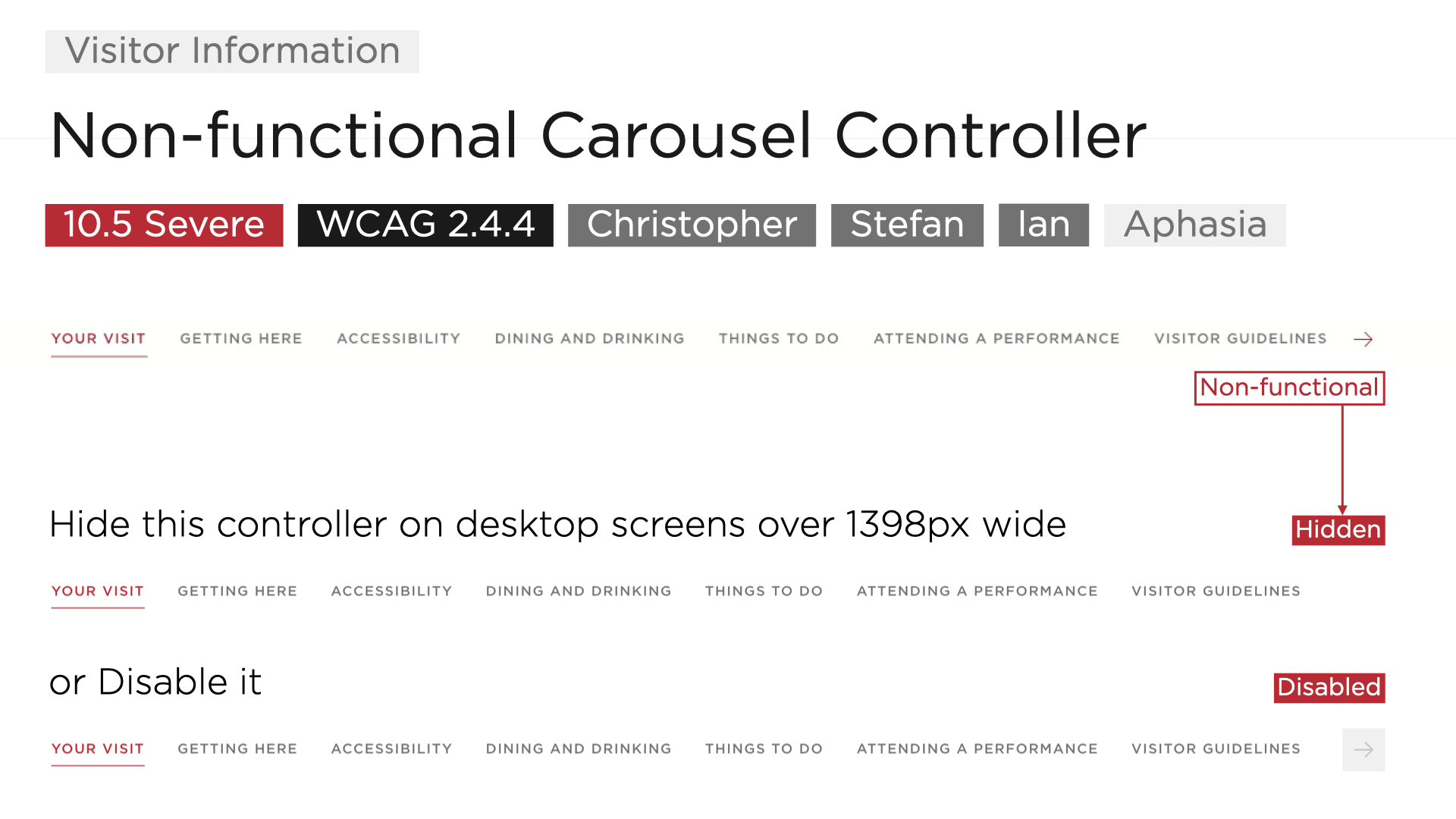
Non-functional Carousel Control

Interactive elements that failed to trigger on screens wider than 1398px, impacting nearly half* of desktop users.

* StatCounter Global Stats (Dec 2024)

Impact & Reflection

Catalysing Change through Shared Empathy

The presentation served as a turning point for the RBO UX team. By connecting technical violations directly to real user barriers, the findings bridged the gap between compliance rules and human experience.

However, acknowledging that our external audit treated all barriers equally, I advised the team to refine priorities using their internal data. By layering factors like accessible event ticket sales and engineering estimates, this recommendation provided the necessary framework to translate our findings into a practical roadmap that fit their operational reality.

Reflection

This project reinforced a vital lesson: Accessibility is not merely a compliance checklist, but a commitment to inclusivity.

The role of a designer extends beyond creating interfaces. It involves acting as a strategic advocate who aligns accessibility with business goals. This ensures technical constraints translate into equitable experiences where no customer segment is excluded from the brand’s promise.